
Por Stiven Cartagena
August 26, 2026
In 2018, when Florianópolis hosted the Startup Summit for the first time, the question was relatively simple: Did Santa Catarina have a startup ecosystem capable of supporting an event of that scale?
Eight years later, the question has changed.
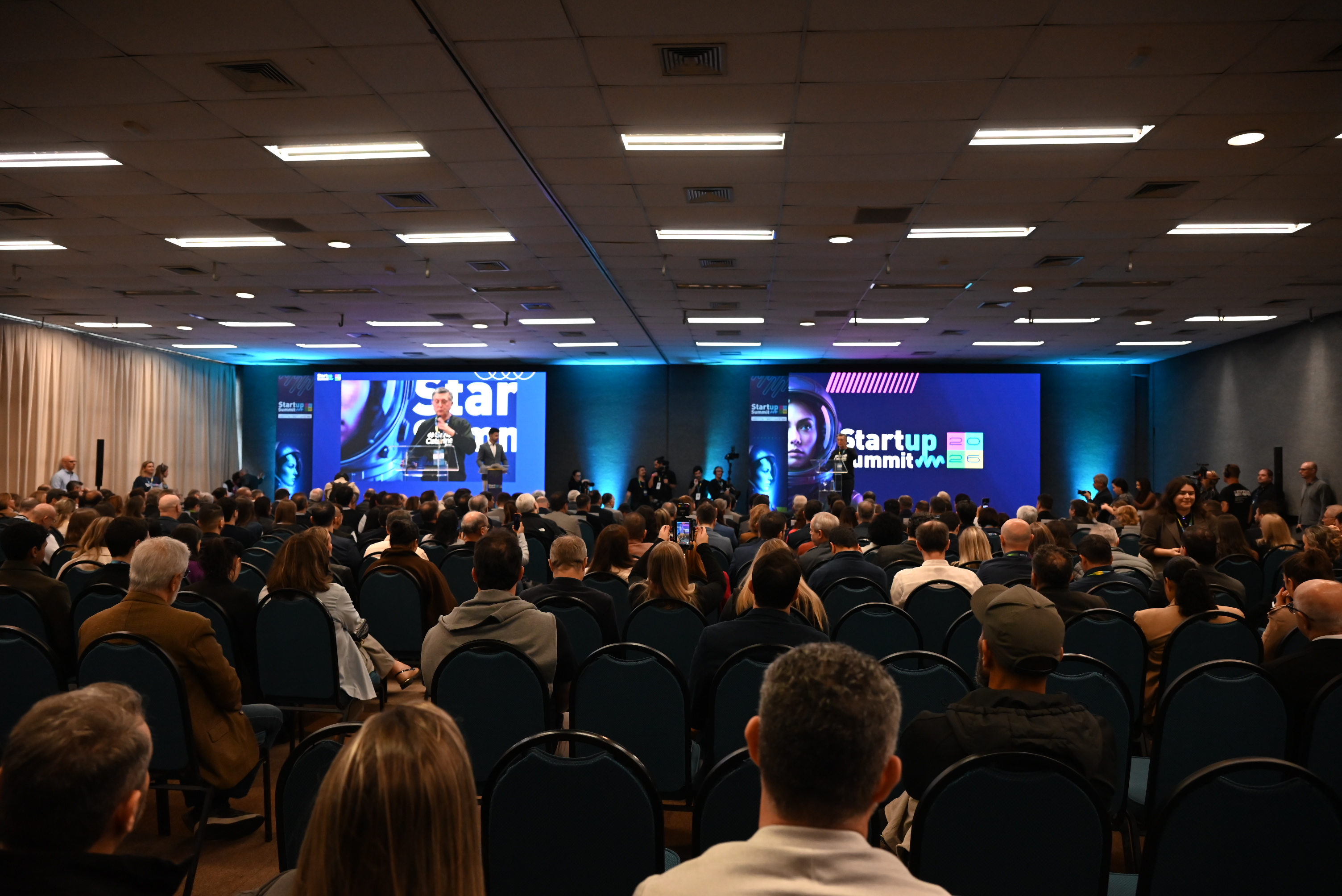
"It's no longer a question of whether we have an ecosystem; it's what we're going to do with it," said Fábio Búrigo Zanuzzi, technical director of Sebrae Santa Catarina, during the opening of the Startup Summit 2026, which began this Wednesday in Florianópolis.
The transformation is evident in the event itself. The first edition brought together only a fraction of the participants now gathering in the capital of Santa Catarina. This time, there are more than 10,000 participants, 283 speakers, 10 stages, and delegations from more than 30 countries, according to Zanuzzi.
But for the local ecosystem, the size of the event is less important than what it represents: a transition from building infrastructure to a stage in which Florianópolis seeks to connect its startups with capital, talent, and markets outside Brazil.
Florianópolis' growth does not seem to be driven solely by tax incentives, infrastructure, or geographic location.
A Startup Genome study cited during the Summit's opening session concludes that the ecosystem's main strength is its community. According to Zanuzzi, a founder in Florianópolis receives nearly twice as many hours of support from other entrepreneurs as their peers in ecosystems such as Stockholm, Frankfurt, or Tel Aviv.
Furthermore, 96% of founders do not intend to leave the city.
That level of retention is significant because it reveals that the ecosystem functions not only as a place where startups set up shop, but also as a network of relationships that retains talent and knowledge.
Zanuzzi attributed this strength to nearly 40 years of collaboration among the institutions that are now part of the Santa Catarina ecosystem.
This is one of the most distinctive features of Florianópolis: startups are not built in isolation. Universities, companies, support organizations, investors, and governments have gradually formed a shared framework around technology entrepreneurship.
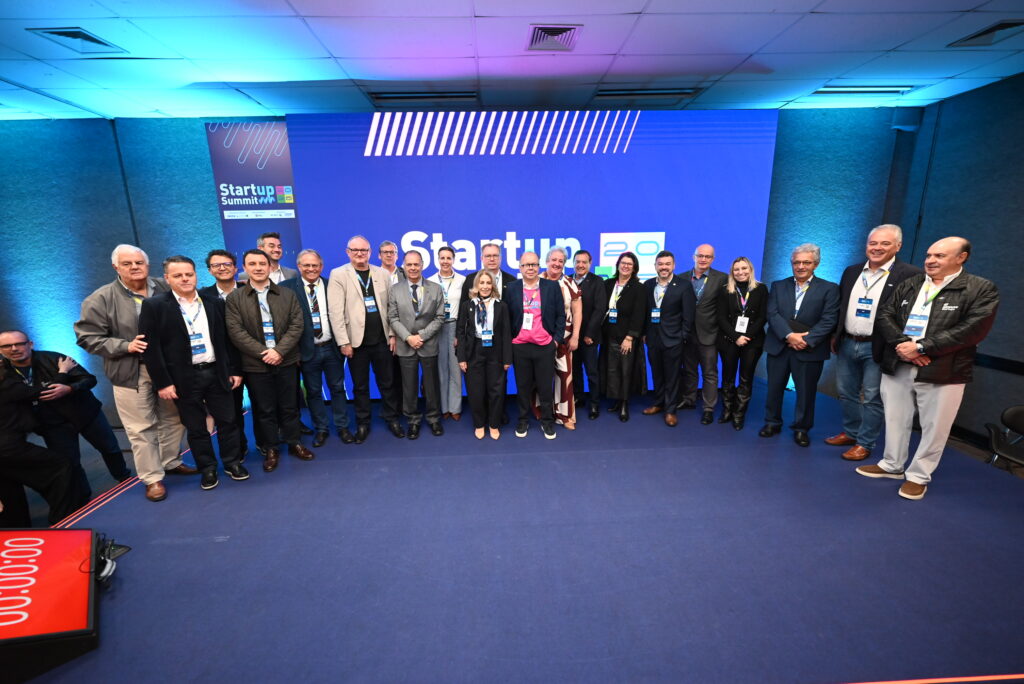
The Federal University of Santa Catarina (UFSC) contributes talent and research; ACATE coordinates the technology sector; Sebrae works with entrepreneurs and small businesses; and public institutions participate in innovation programs, infrastructure, and policies.
The process is cumulative. A university can train the founder; an incubator can help develop the product; a company can become a client; a fund can finance growth; and an organization like ACATE can connect the company with other businesses and markets.
That network is precisely what Zanuzzi considers difficult to replicate.
Local success, however, is also creating the next challenge.
According to Startup Genome data presented by Zanuzzi, founders in Florianópolis have 27% fewer connections to the world's leading ecosystems, while only 23% target global markets from the outset.
The paradox is clear: the city has managed to build an attractive environment for starting a business, but it still needs to develop better pathways to take those companies beyond Brazil.
"We've built one of the best places in Brazil to start a business, but we haven't yet built the path for those businesses to reach the world," explained Zanuzzi.
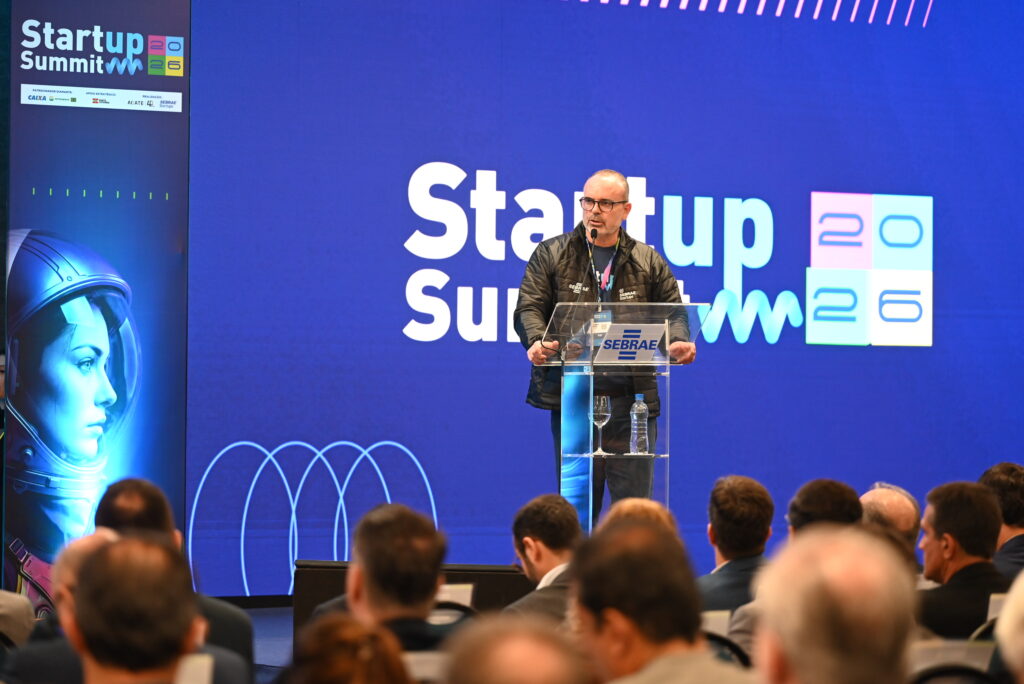
The Startup Summit 2026 is aimed precisely at opening that path.
This year's edition features the Startup Summit Global, with delegations from nearly 30 countries, international investors, universities, and tech hubs. There will also be matchmaking sessions between Brazilian startups and foreign representatives.
The strategy is based on a simple premise: internationalization isn't achieved simply by announcing that an ecosystem wants to go global. It requires relationships between people, funds, companies, and universities.
"Bridges between ecosystems are built by people, not by announcements," said Zanuzzi.
The challenge is also territorial.
During the opening ceremony, Zanuzzi urged attendees to view Santa Catarina as a complete ecosystem and not just its capital. According to the REPID 2025 index, which compares Brazil's 27 states, Santa Catarina ranks second nationally—its highest-ever ranking.
According to that index, the state leads in the number of startups, connectivity, and institutional environment.
But the same data reveal weaknesses that could limit this growth: Santa Catarina ranks seventh in basic education, seventh in research and development, and eighth in skilled labor.
This contradiction is significant. The state already has companies, entrepreneurs, and an institutional framework to drive innovation, but it needs to strengthen the conditions that foster talent and knowledge if it wants to sustain that growth over the next decade.
For this reason, Sebrae Santa Catarina and the State Secretariat of Science, Technology, and Innovation presented the REPID SC 2030 during the Startup Summit.
The initiative involves 20 institutions that will take responsibility for 80 indicators in the index, with defined goals, deadlines, and responsible parties.
The intention is to turn the indicators into a shared governance agenda.
"None of them can drive these indicators on their own," said Zanuzzi.
Another challenge emerged during the opening remarks, broadening the conversation beyond the tech ecosystem.
Artificial intelligence is lowering the cost of building software companies, but it can also become a productivity tool for businesses outside major tech hubs.
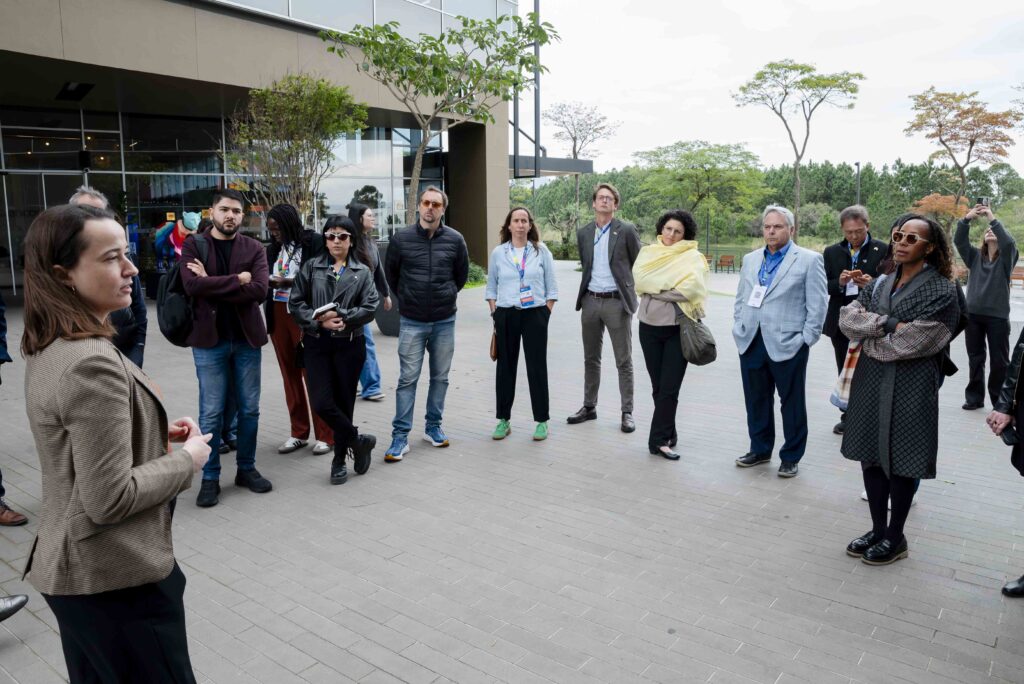
Santa Catarina has 295 municipalities and more than one million small businesses, according to data presented by Zanuzzi. These include bakeries, repair shops, clinics, garment manufacturers, inns, and other businesses that are rarely part of traditional discussions about venture capital or startups.
For them, AI may represent an opportunity for increased productivity, but it also poses the risk of falling even further behind companies that do have access to technology.
"If technology reaches only Florianópolis, it doesn't reduce inequality; it increases it," said Zanuzzi.
This approach also changes the role Sebrae plays within the ecosystem. The organization seeks not only to promote startups but also to connect those companies with the traditional economy.
"Startups and small businesses aren't separate agendas; they're the same economy at different stages," he said.
The Startup Summit 2026 thus represents a turning point of sorts for Florianópolis.
The city no longer needs to convince Brazil that it has a tech ecosystem. Data on the community, founder retention, companies, and institutional connections all point in that direction.
Now it must demonstrate that it can produce companies capable of growing internationally, attract foreign capital, and keep the economic value generated by those companies within Santa Catarina.
Over the course of three days, more than 10,000 people—including investors, startups, corporations, universities, and international delegations—will gather in Florianópolis.
The underlying goal is more ambitious than simply organizing another major startup event. As Zanuzzi put it during the opening: in 2018, the goal was to prove that Santa Catarina deserved to be on the map: "That's been done."
Now the challenge is to ensure that companies founded there stay in Santa Catarina, grow, and reach the world without needing to leave the state. Florianópolis has gone from wondering whether it had enough startups to sustain a major event to discussing how to transform its tech community into companies capable of competing internationally. This week, the Startup Summit 2026 is bringing together more than 10,000 people and delegations from nearly 30 countries.
Por Stiven Cartagena
August 26, 2026
Por Contxto
March 17, 2026
March 12, 2026
November 19, 2025
November 5, 2025