
Por Stiven Cartagena
March 30, 2026
While most children his age spend their time playing video games, AI entrepreneur Bob Chopra spends many of his afternoons designing the future of education.
At just nine years of his, he’s one of the youngest entrepreneurs in the world and the founder of IvySchool.ai, an Edtech platform looking to prepare other children for a world of AI.
The idea was not born in a Silicon Valley garage, but rather in the classroom. Chopra attended Gulliver, a top rated school, but found that not everything was adding up. In particular, he computer science curriculum –particularly of interest to him– fell short. Tools like Kodable were fun, but they represented the educational ceiling for students his age.
Said Bob in an interview with Startupbeat, “The moment came when I was at Gulliver in Miami, one of the most elite schools in the country. We were using Kodable as part of the curriculum, which was fun, but that was basically the limit of ‘computer science.’ There was no real entrepreneurship or AI-era thinking – not because the school didn’t care, but because that wasn’t the teachers’ expertise.”
That was when his parents noticed a shift in his behavior. Instead of consuming content from creators like Mr. Beast, Chopra began building with Hopscotch, a programming platform for children—moving from spectator to creator.
With the support of his family, Chopra began taking structured courses from institutions such as MIT, Harvard, Stanford, and Wharton. He learned about entrepreneurship, artificial intelligence, data science, and business. By the age of eight, he had already obtained certificates in computer science and entrepreneurship from four elite universities.
But the real turning point came when his parents presented him with a decision: go to a boarding school or try to build something of his own. Chopra chose the latter.
“Eventually, my parents gave me a choice: go to boarding school or try building something of my own. That’s when it clicked. If these courses could prepare me for an AI-first world, they could prepare other kids too. IvySchool.ai started as a simple idea: give students access to the kind of future-ready education I had to search for on my own.”
IvySchool.ai’s platform is not a replica of traditional classrooms. It is designed under a bold premise: “created by children for children.” Chopra personally tests every lesson, every challenge, and every tool. If something feels boring, confusing, or too slow, it gets changed.
“When we say IvySchool is “designed by children for children,” it means we don’t guess what kids need – we build from how we actually learn.”
The platform is structured the way children think: short challenges, hands-on projects, and the freedom to explore rather than follow instructions step by step.
“We focus on learning by building: coding real things, solving real problems, and applying ideas right away. Adults help with structure and safety, but the learning experience comes from a child’s point of view. That’s what makes it work for kids my age.”
The approach is centered on learning by building—programming real things, solving real problems, and applying ideas in real time. Adults support with structure and safety, but the learning experience is rooted in a child’s perspective.
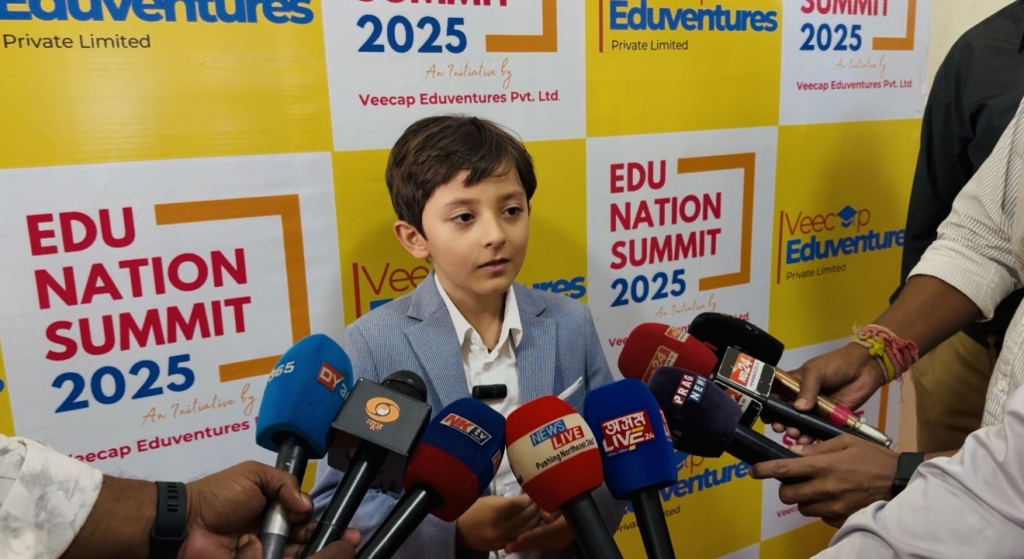
Recently, the company partnered with Delhi Public School (DPS) to provide its students access to a ten-day intensive bootcamp in AI and programming. The program offers hands-on experience in building chatbots and AI-powered software tools.
While major technology companies explore how teachers can use AI in the classroom, India is planning to implement an AI curriculum across all schools starting from third grade, beginning in the 2026–27 academic year.
This is an approach that will likely be adopted by more schools around the world. AI has already had a dramatic impact on the job market, making some roles obsolete while increasing the value of others. School and university curricula must keep up with these changes and evolve at the pace of the future of work.
Instead of simply being digitally skilled in tools like AI, the focus is shifting toward demonstrating talent in leadership, creativity, and critical thinking to apply technology in solving real-world challenges.
“Students today need to move from passive learning to building real solutions,” said Chopra. “Early exposure to AI and coding helps develop creativity, confidence, and critical thinking that will shape their future careers.”
IvySchool.ai engages students with university-level concepts at an early stage as part of its mission to expand access to AI and computer science and to inspire the next generation of leaders.
The company’s hands-on bootcamp moves away from theoretical approaches, immersing students in project-based learning to strengthen their practical technology skills. Students dive into critical foundational areas, including Python programming, computational thinking, AI fundamentals, and basic machine learning concepts.
Students also build and create their own prototypes during the ten-day program, including AI chatbots, automation tools, and beginner software applications, gaining valuable real-world problem-solving experience beyond classroom theory.


Por Contxto
April 8, 2024
Por Contxto
March 25, 2024