
Por Stiven Cartagena
August 25, 2026
Buying, selling, or renting a property remains one of the most significant financial decisions a person can make, but much of the real estate brokerage in Chile still takes place through fragmented processes: spreadsheets, WhatsApp, emails, websites, and informal agreements. This situation served as the starting point for Dataprop, a Chilean proptech company that aims to digitize the operations of real estate brokers and agencies.
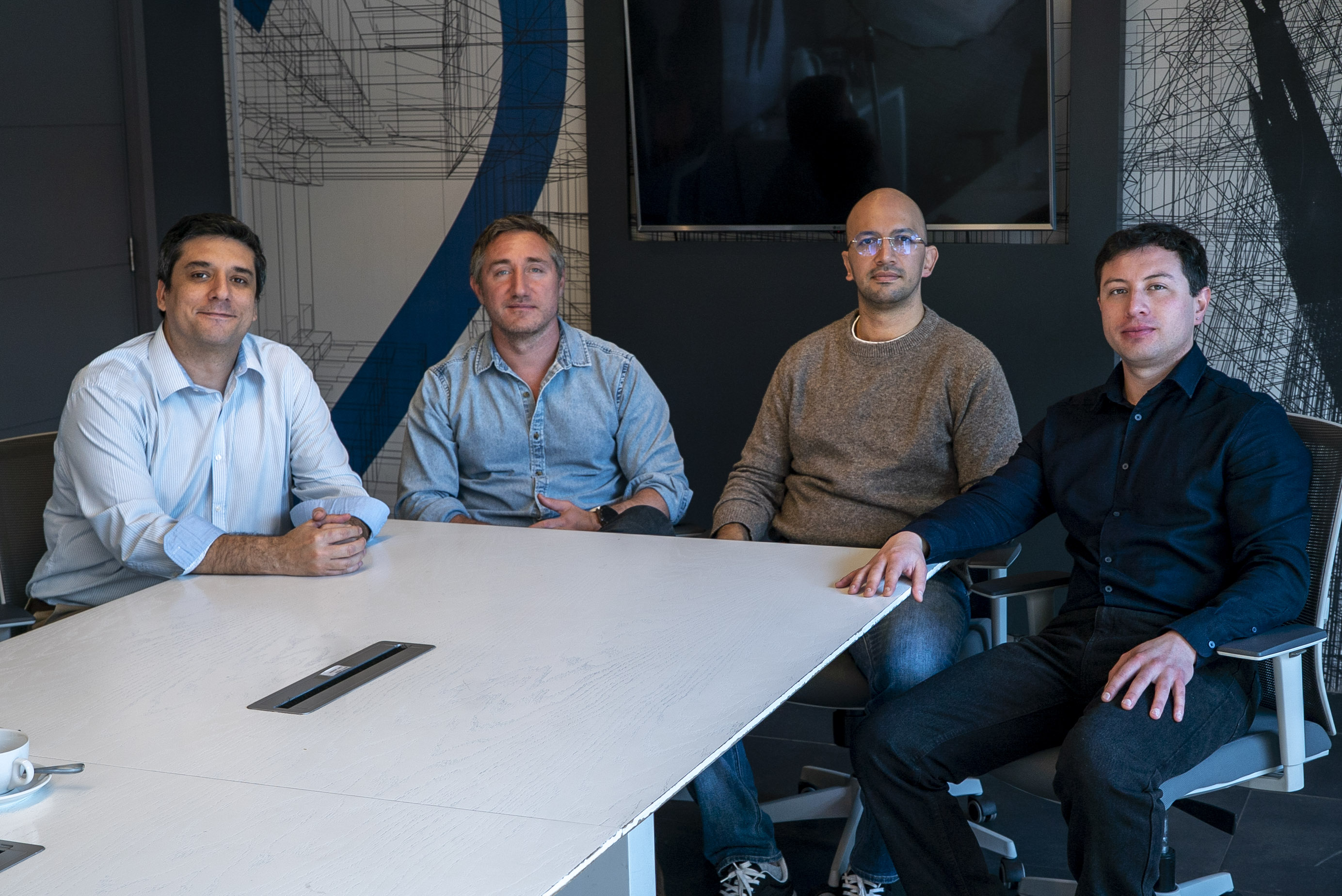
The company began operations in April 2023 and was founded by Mario Lipari, CEO, and Sebastián Estrada, CTO. In 2024, Gonzalo Uribe joined the team to strengthen the sales and operations departments. According to the company, the project arose from Lipari's experience with his mother, who worked for years as a real estate agent using tools with a low level of digitization.
"Over time, we realized that this situation was not an isolated case. Many real estate agents work incredibly hard, but in an industry that still doesn't provide them with the tools, standards, or technology needed to compete more effectively and deliver a more secure experience to their clients," says Mario Lipari, CEO of Dataprop.
The challenge identified by Dataprop aligns with a broader trend within the real estate sector. According to the Deloitte 2025 Commercial Real Estate Outlook, 76% of the organizations surveyed were researching, testing, or beginning to implement artificial intelligence solutions. At the same time, only 14% considered their processes sufficiently structured for data collection and management, highlighting one of the main obstacles to scaling these technologies.
Although the Deloitte study focuses on commercial real estate and not specifically on residential brokerage, its findings point to a cross-cutting issue: digital transformation does not depend solely on incorporating artificial intelligence, but also on organizing the data and processes on which real estate companies operate.
In Dataprop's case, the initial assessment came from interviews with real estate agents. The company identified issues related to collaboration among agents, commission payments, a lack of clarity in agreements, slow processes, and poor traceability. Subsequently, it supplemented this work with studies conducted by the consulting firm Studio Público among real estate agents and individuals who had used real estate brokerage services.
"Globally, we're already seeing that these types of platforms are gaining tremendous momentum. That's precisely the trend we see coming for Chile: real estate brokerage will increasingly rely on technology, data, and collaboration to operate more effectively, build greater trust, and avoid falling behind," says Lipari.
Dataprop's proposal is based on a premise: the problem does not necessarily lie in the broker's role, but rather in the tools they use to do their job.
Information about a transaction can be scattered across different channels, making it difficult to track opportunities, manage documentation, coordinate listings, and communicate with buyers and sellers.
"Real estate brokerage doesn't need to disappear; it needs to evolve. The real estate agent remains key, because they advise, guide, and build trust in a very important decision. The problem is that the industry operates with highly inconsistent standards and tools that often aren't up to the challenge," adds Lipari.
The platform combines features such as real estate CRM, listings on property portals, a property exchange portal, real-time reporting, price comparisons, digital signatures, payment gateways, legal support, social media campaigns, and AI-based tools. It also incorporates a collaboration model among real estate agents for sharing opportunities and properties.
According to figures provided by the company, Dataprop currently has 842 clients, more than 1,000 active users, and a portfolio of over 16,000 properties, including both new and pre-owned homes. Its collaborative network adds another 8,000 properties available to generate business opportunities.
The startup's strategy does not aim to eliminate real estate agents but rather to change the way they work. For Dataprop, professionalizing the industry involves establishing minimum training standards, improving the management and traceability of agreements, and facilitating collaboration among agents.
"The industry needs more technology, but it also needs better practices. It's not enough to list properties on more websites; you have to streamline the entire operation, follow up, make processes transparent, and build trust. That's where we want to make a difference: by enabling real estate agents to work more effectively, close more deals, and deliver a more professional service," says Gonzalo Uribe, head of business and operational development at Dataprop.
This approach also reflects a broader discussion on the adoption of AI in real estate. Deloitte notes that 88% of participants in its study planned to use digital technologies to improve their companies' performance or reach over the next 12 to 18 months. Among them, 51% identified AI-driven automation as the primary goal for increasing technology investment.
For Dataprop, however, the sector's digital transformation is not limited to incorporating new tools. The company aims to turn technology into an infrastructure to streamline the day-to-day management of real estate agents and agencies, from identifying opportunities to tracking and closing deals.
"For years, there has been talk of digitizing the property search process, but less so about digitizing the actual work of the real estate agent. That's where our focus lies: professionalizing from within an industry that remains highly relevant but needs to take a leap forward in efficiency, trust, and service standards," concludes Lipari.