
April 27, 2026
At the StartCO 2026 artificial intelligence panel, representatives from Bancolombia, Claro, AWS, and NVIDIA discussed how technology is changing the game for startups in Latin America.
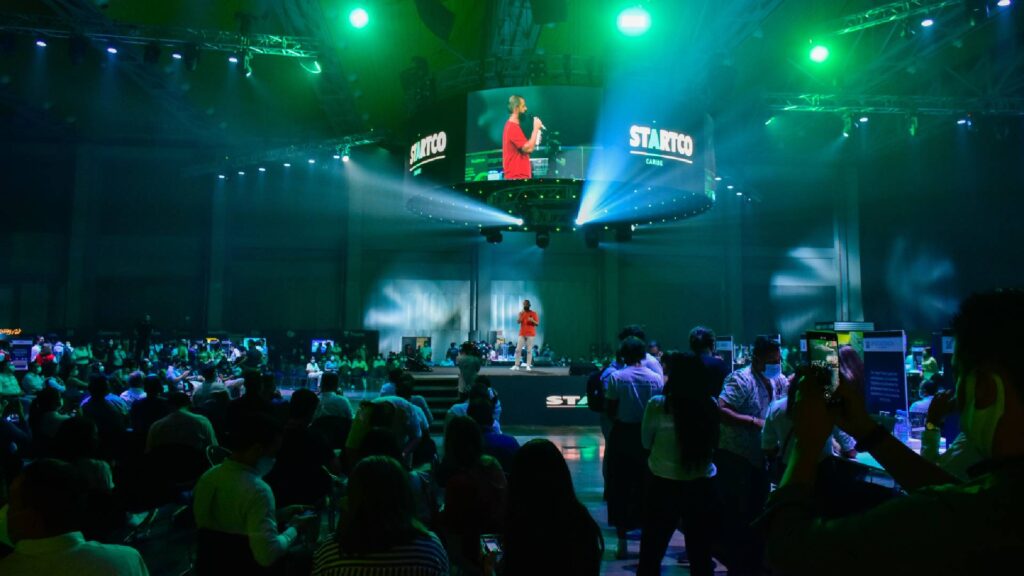
As part of StartCO 2026, one of the key gatherings of Latin America's entrepreneurship and innovation ecosystem, four executives from major corporations shared their perspectives on the impact of artificial intelligence on business, access to credit, and talent development.
The panel brought together Luz María Velásquez from Bancolombia, Pedro Ángel Montagut from Claro, Carlos Ordoñez from Amazon Web Services (AWS), and Andrei Golfeto from NVIDIA.
For Bancolombia, artificial intelligence is not a future bet; it is an operational reality. Velásquez explained that the bank already has high levels of automation in several credit segments, and that the next step is to extend that capability to populations that currently lack access to the financial system, including startups.
"We're not just taking a snapshot. What AI will allow us to do is look to the future: project, get to know the customer better, and provide access to many more," said Velásquez.
The executive emphasized that this process requires two non-negotiable conditions: trust and control. As models become more involved in approval decisions, both factors must be present in the design of the systems.
Pedro Ángel Montagut presented Claro's transformation as a case of corporate reinvention driven largely by the demands of the startup ecosystem. The company, which for decades billed for minutes and data, had to reconfigure its business model to offer professional services by the hour, development teams, and access to cloud infrastructure without large upfront investments.
One of the most significant changes was a company-wide certification in artificial intelligence, conducted in partnership with Claxy. The result, according to Montagut, was that business areas that had never considered AI began to identify their own use cases.
"We made it very dynamic. The entire company was certified in artificial intelligence, and that allowed each area to understand not only the concept but also how it could be applied," explained Montagut.
Montagut also warned about a common mistake among startups: leaving cybersecurity for last. "By the time they realize it, they've lost the business, their data has been stolen, and they're facing legal issues," he said, urging companies to integrate it from day one as part of their scalability strategy.
Carlos Ordoñez, from AWS, emphasized that the main obstacle to AI adoption in startups is not the technology itself, but the speed of getting to market. Amazon's Activate program has invested over US$8 billion in credits for startups globally, with the goal of bridging that gap. "The question is no longer whether I'm going to use artificial intelligence. It's which model is right for the problem I want to solve," he said.
Andrei Golfeto, for his part, presented NVIDIA Inception, the company's free program for startups, which includes credits on Amazon, discounts on hardware, and access to specialized training. Golfeto highlighted that Latin America, and Colombia in particular, is viewed globally as a leader in the adoption of digital financial services, making the region a natural testing ground for AI solutions applied to finance.
The panel concluded with a shared vision of what role will remain for humans in an increasingly automated ecosystem. The conclusion was unanimous: what will disappear are basic advisory services and operational friction. What will become more valuable is expert judgment.
Velásquez illustrated this with bank branches: they won't disappear, but they will transform into experience and advisory centers. "Customers will want to go there to receive that advice and connect with the bank," he said. "Everything else they'll be able to do digitally."
For startups, the message was that infrastructure, capital, and partners are available. The distinguishing factor, the panelists agreed, is curiosity and the speed to bring something to market and learn from it.

Por Contxto
September 11, 2026