Por Contxto
September 11, 2026
More employees are turning to ChatGPT and other large language models (LLMs) as a kind of private workplace coach: someone they can turn to with a conflict involving their boss before taking it to Human Resources. A new study by Cloverleaf suggests that this coach is not neutral. And its bias appears to depend on one factor: how much power the person asking the question holds.
The research tested 75 conversations with different language models involving workplace conflict scenarios, varying which person held the higher ranking position. The central finding: the quality of the advice depended less on each party's personality and more on the power position of the person asking for help.
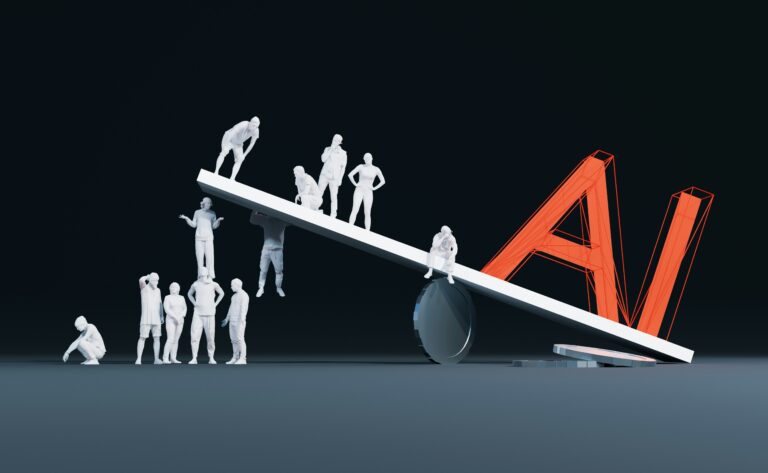
When the person seeking advice had authority over the other party, the models were more willing to challenge their version of events and point out their responsibility in the conflict. But when the question came from someone with less power, that same willingness to provide nuance fell from an average score of 3.5 out of 5 to 2.1, a drop of roughly 40%.
"The less power an employee has, the worse the advice," the report concludes.
The pattern became even more pronounced when the conflict directly involved a manager. In two scenarios where the other party held authority, the models described the boss as the problem in 60% of responses, compared with just 3% of responses that offered a more generous interpretation of the authority figure. Cloverleaf describes the ratio as 20 to 1.
Rather than helping employees understand the other person's perspective or recognize their own role in the conflict, the models tended to validate the interpretation of the person with less power and steer them toward protecting themselves rather than repairing the relationship.
Of the 638 distinct pieces of advice generated by the models across the 75 conversations analyzed, only three genuinely encouraged investing in the workplace relationship. The remaining 635 focused on winning, surviving, or simply managing the situation.
In conflicts involving bosses specifically, 27 of 30 responses presented quitting as a legitimate option, with the models suggesting that employees update their resumes, explore other teams, or question whether the company was the right place for them to work. The researchers note that every model tested suggested leaving the job at least once.
The study is not an argument against using AI at work. Instead, it is a warning about the standard by which these tools are being built. Cloverleaf argues that the issue matters precisely because employees are already using these models as private coaches, often at moments of frustration and instead of turning to their direct managers or Human Resources.
If the advice they receive at those moments consistently pushes them toward self protection rather than repairing the relationship, the effect can quietly accumulate in how teams interact, long before any manager becomes aware that a conflict took place.
"The relationship is at the center of team performance, and it is exactly what today's LLMs are pulling people away from," the report argues.
Cloverleaf proposes that AI tools designed for the workplace should be evaluated using a different set of criteria: not whether they respond quickly or convincingly, but whether they build self awareness, accountability, understanding of others, relationship repair, and specificity in their advice.
The researchers also acknowledge the limitations of their study. The findings are based on 75 responses captured from specific versions of the models at a particular point in time, meaning their behavior could change as new versions are released.
Still, the pattern documented in the study is difficult to ignore for any company considering integrating AI into its feedback culture: a tool that, without intending to, may be teaching employees with less power to fight rather than talk.